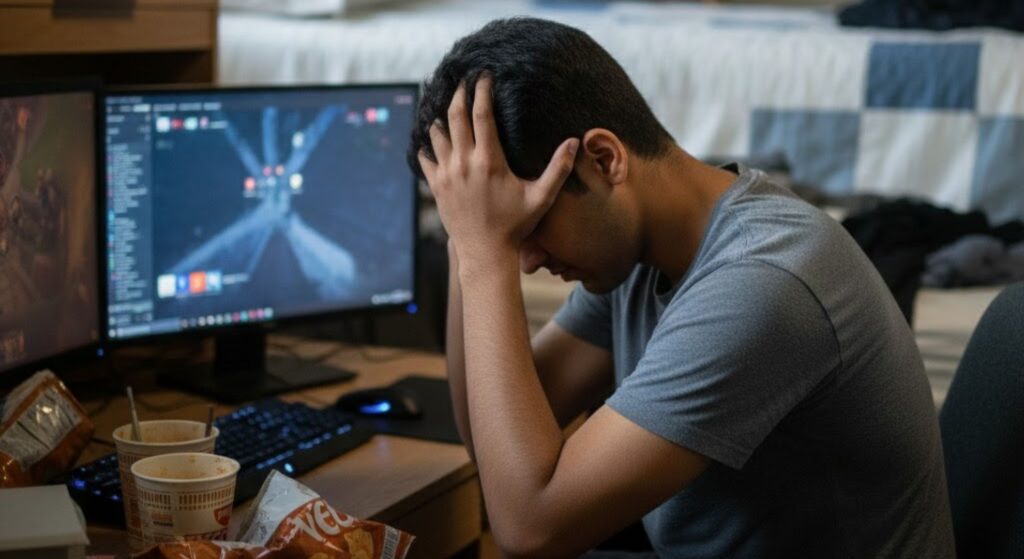
Welcome to WordPress. This is your first post. Edit or delete it, then start writing!
Heavy Gaming Linked to Poor Diet & Higher BMI in Students.
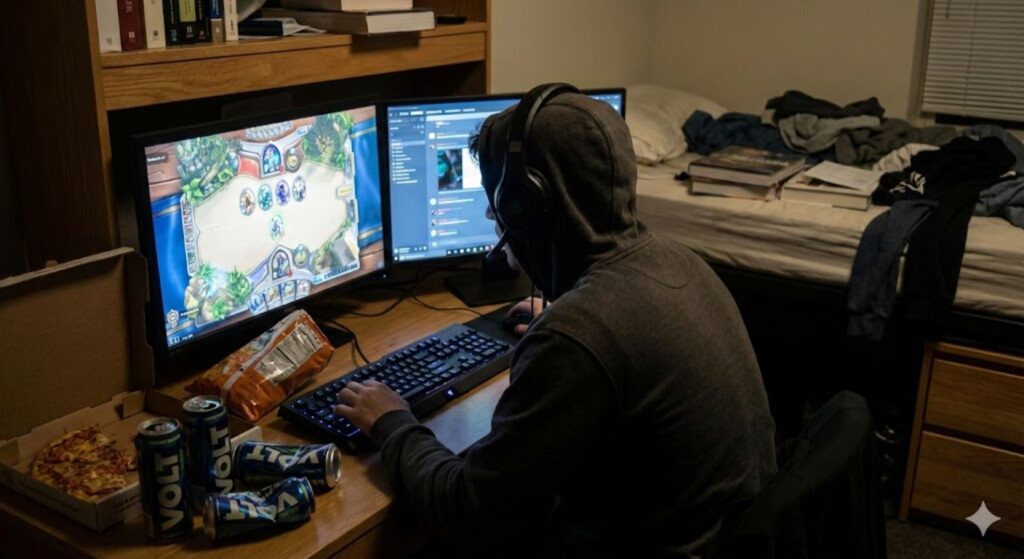
Understanding the Lifestyle Risks Highlighted by New Medical Research
Gaming has become an integral part of student life. For many young people, it is a source of relaxation, social connection, and entertainment. However, recent medical research suggests that excessive gaming may be associated with unhealthy lifestyle patterns. Studies now indicate a clear link between heavy gaming, poor diet quality, and higher Body Mass Index (BMI) among students.
This blog explains what the research reveals, why these patterns emerge, and how students can balance gaming with a healthier lifestyle.
What Recent Medical Research Reveals
New studies examining the habits of university and college students have found that those who spend more than 10 hours per week gaming show notable differences in health compared to light or moderate gamers.
Key findings include:
-
Lower overall diet quality
-
Increased consumption of fast food and processed snacks
-
Higher average BMI
-
Poor sleep quality, especially among late-night gamers
The research does not suggest that gaming itself is harmful. Instead, it highlights how excessive gaming is linked to unhealthy routines that negatively affect nutrition, physical activity, and sleep.

Understanding the Link Between Gaming and Diet
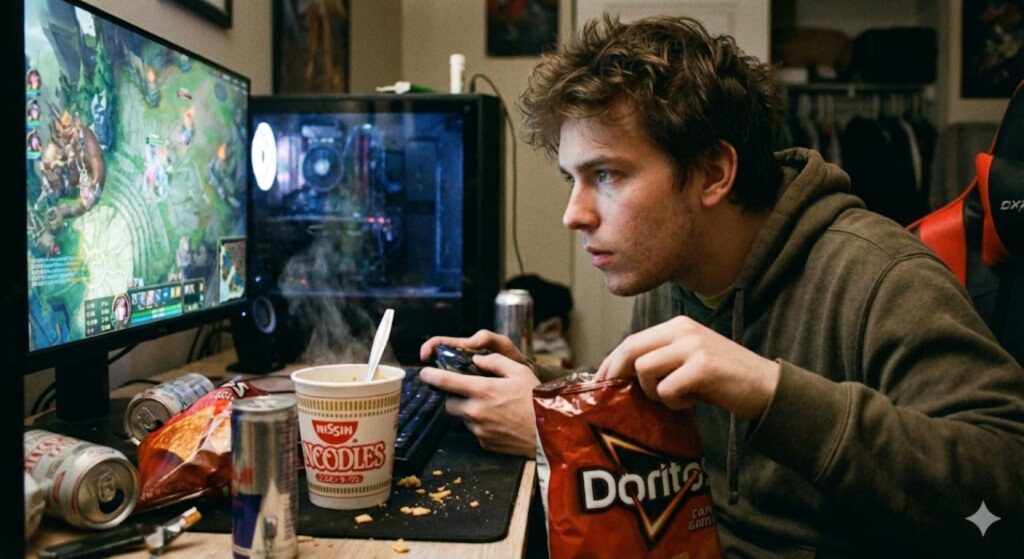
One of the strongest associations observed in heavy gamers is poor dietary habits. Long gaming sessions often lead to irregular eating patterns and unhealthy food choices.
Common reasons include:
-
Time displacement: Gaming replaces time that could be spent preparing balanced meals.
-
Convenience eating: Packaged snacks, instant noodles, sugary drinks, and fast food become easy options.
-
Distracted eating: Eating while gaming reduces awareness of portion size and fullness, leading to overeating.
Over time, these habits reduce nutrient intake and increase calorie consumption.
How Heavy Gaming Contributes to Higher BMI
BMI reflects long-term energy balance rather than short-term behavior. Heavy gaming can influence this balance in several ways:
-
Sedentary behavior: Extended sitting reduces calorie expenditure.
-
High-calorie intake: Frequent snacking during gaming increases daily calorie consumption.
-
Sleep disruption: Late-night gaming affects metabolism and appetite regulation.
When these factors combine, they can gradually lead to weight gain, especially in students with limited physical activity.
The Role of Sleep in Gaming-Related Health Risks
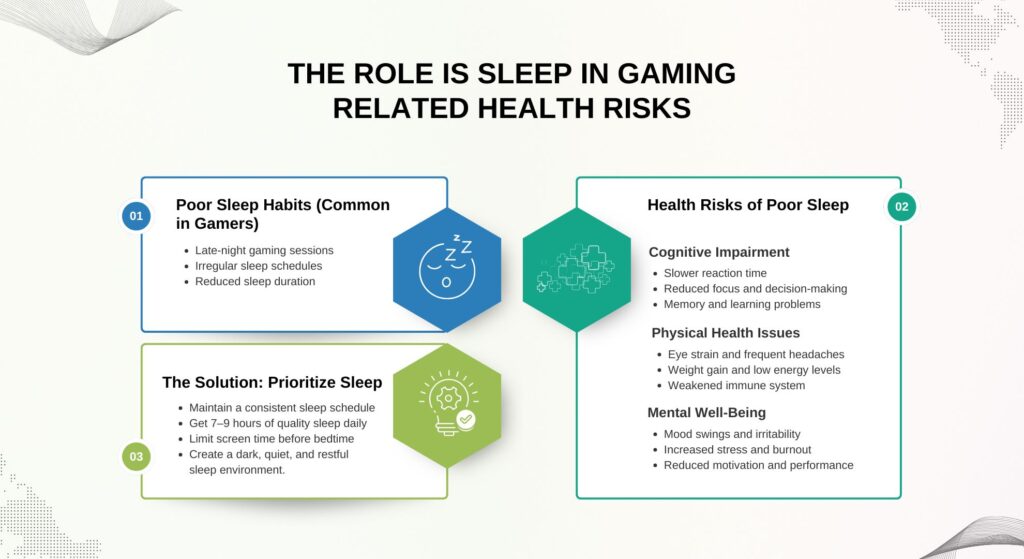
Sleep plays a crucial role in maintaining healthy body weight and eating habits. Heavy gaming often interferes with sleep due to:
-
Late-night gaming sessions
-
Exposure to bright screens before bedtime
-
Mental stimulation that delays sleep onset
Poor sleep is associated with increased hunger, sugar cravings, and reduced energy for physical activity, further worsening dietary and weight outcomes.
Who Is Most at Risk?
Students at higher risk typically:
-
Game for long hours every week
-
Prefer late-night gaming sessions
-
Have irregular meal schedules
-
Consume more processed and fast foods
-
Engage in minimal physical activity
In contrast, students who game in moderation and maintain structured routines tend to show fewer negative health effects.
Balancing Gaming With a Healthy Lifestyle
Gaming does not need to be eliminated to protect health. Simple lifestyle adjustments can significantly reduce risk:
-
Limiting weekly gaming hours
-
Eating proper meals before gaming
-
Choosing healthier snacks
-
Taking short movement breaks during gaming sessions
-
Maintaining consistent sleep schedules
These habits help students enjoy gaming while supporting long-term health.
Conclusion
The latest medical research highlights an important message: gaming is not the problem—excessive gaming combined with poor lifestyle habits is. Heavy gaming is linked to poor diet quality, higher BMI, and disrupted sleep among students, but these effects are preventable.
By maintaining balance, building healthy routines, and being mindful of daily habits, students can continue gaming without compromising their physical well-being.